
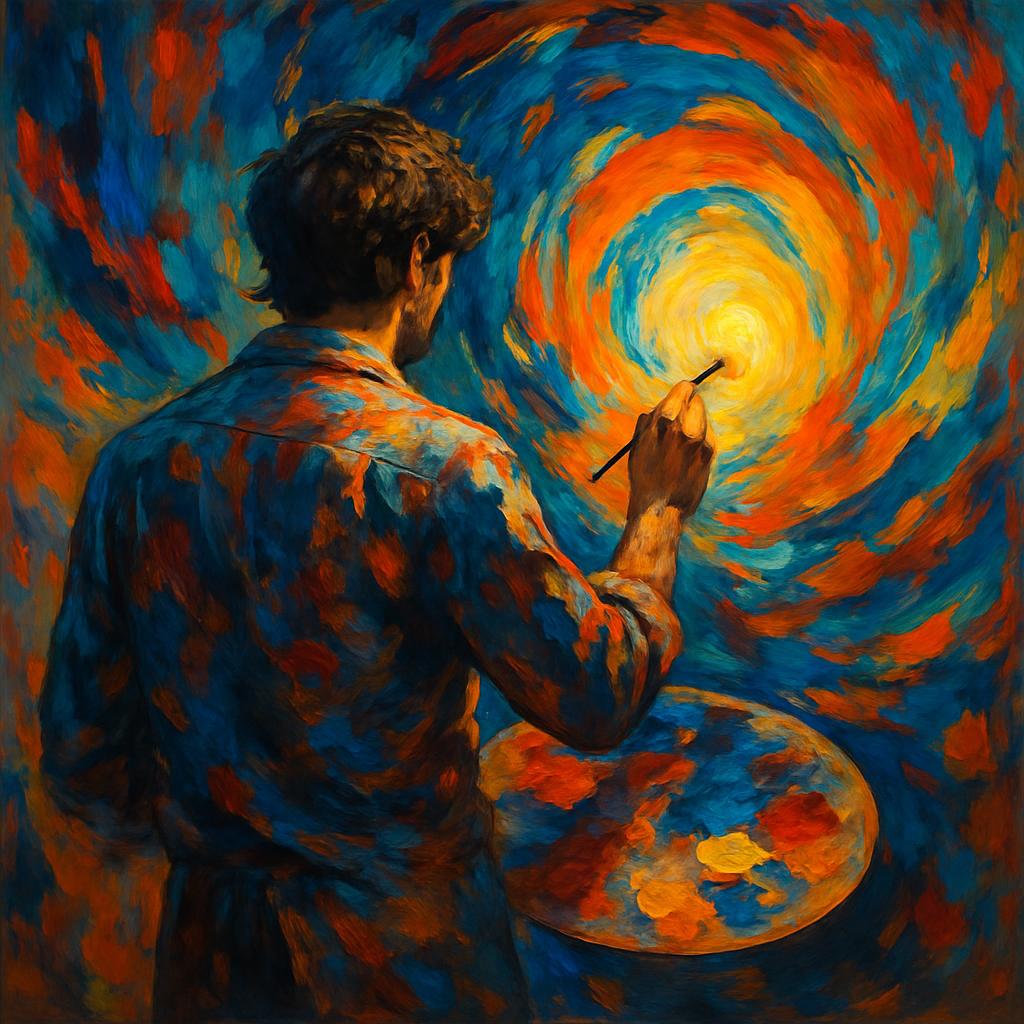
In an age defined by accelerating change, contemporary art has become more than a record of our times. It is a mirror—sometimes cracked, sometimes polished—that reflects not just the culture we inhabit, but the intimate spaces of self-perception. This mirror is never neutral: it refracts, distorts, and sharpens our view, revealing what is often unseen or unspoken.
Rupture Magazine embraces this complexity, encouraging a mindful approach to art that foregrounds personal connection and the transformative potential of engaging deeply with artworks. Whether in the hushed stillness of a gallery, the cacophony of a street festival, or the tactile slowness of a handmade installation, art invites us to pause, reflect, and see ourselves anew.
Art as Rupture and Reflection
The French philosopher Jacques Rancière has described art as a site of dissensus—a disruption of the visible and sayable that rearranges how we perceive the world. This rupture is not mere destruction; it is an opening. Ai Weiwei’s Sunflower Seeds (2010) embodies this principle with striking clarity: one hundred million hand-painted porcelain seeds carpeting the floor of Tate Modern’s Turbine Hall, each seed a quiet protest against mass production and political erasure. The work confronts the viewer on multiple scales—overwhelming in mass, delicate in detail—and invites both sensory immersion and political reflection.
This duality, the ability to connect the personal to the collective and the aesthetic to the political, is where art’s mirror becomes most transformative.
Mindfulness and Embodiment in Viewing
A recent Hyperallergic piece on museum education explored mindful viewing practices, from synchronising breath with brushstrokes to clustering together before a single work in silence. These simple acts slow down perception, enabling a shift from passive observation to embodied engagement.
This resonates with my own encounters in public art contexts, where slowing down often reveals what fast-paced cultural consumption obscures: the subtle textures of emotion, memory, and belonging embedded in the work. It also echoes Paulo Freire’s paedagogy of praxis—understanding emerges through active participation, not passive reception.
Local Resonance: Otautahi Bloco de Carnaval
In Christchurch, New Zealand, the Otautahi Bloco de Carnaval transforms streets into spaces of collective creation. Rooted in Brazilian carnaval traditions, the event, developed in collaboration with local communities, becomes a living artwork where music, costume, and movement dissolve barriers between participants and spectators.
Different from what we understand about a Carnaval, this event was made based on people’s experiences. It was an exchange of knowledge, and 14 workshops were enough to exchange and organise this event, which was held on the empty land in Christchurch, New Zealand. For more about it, click here.
Slow-Made Encounters
Australian artist Rose Nolan, profiled in The Guardian, rejects the digital rush of contemporary life by crafting tactile, handmade installations from humble materials like hessian and cardboard. Her work invites viewers to linger, to physically and emotionally connect with surfaces, textures, and imperfections. This commitment to slowness is an act of resistance, offering a counterpoint to the commodification of attention.
The Voice of the Writer
As curator Helen Molesworth observed in her Vogue interview, writing about art need not be locked in academic formality. Her essays have shifted towards the personal and vulnerable, while maintaining intellectual rigour, a tone that Rupture Magazine embraces. This balance mirrors the very subject we explore: the tension between self-reflection and cultural discourse, between intimacy and universality.
Conclusion: Seeing Through the Mirror
Contemporary art’s mirror is never fixed. It shifts with each gaze, with each cultural moment, and with each embodied encounter. To engage deeply with art, whether it is Ai Weiwei’s politically charged porcelain seeds, the carnival streets of Christchurch, or the textured walls of a Rose Nolan installation, is to see ourselves not in isolation, but as part of a living cultural fabric.
In a time when distraction is currency, choosing to slow down, look closely, and feel deeply is itself a radical act. And in that act, art becomes not only a reflection but also a means of transformation.
 Rupture Magazine
Leave a comment