
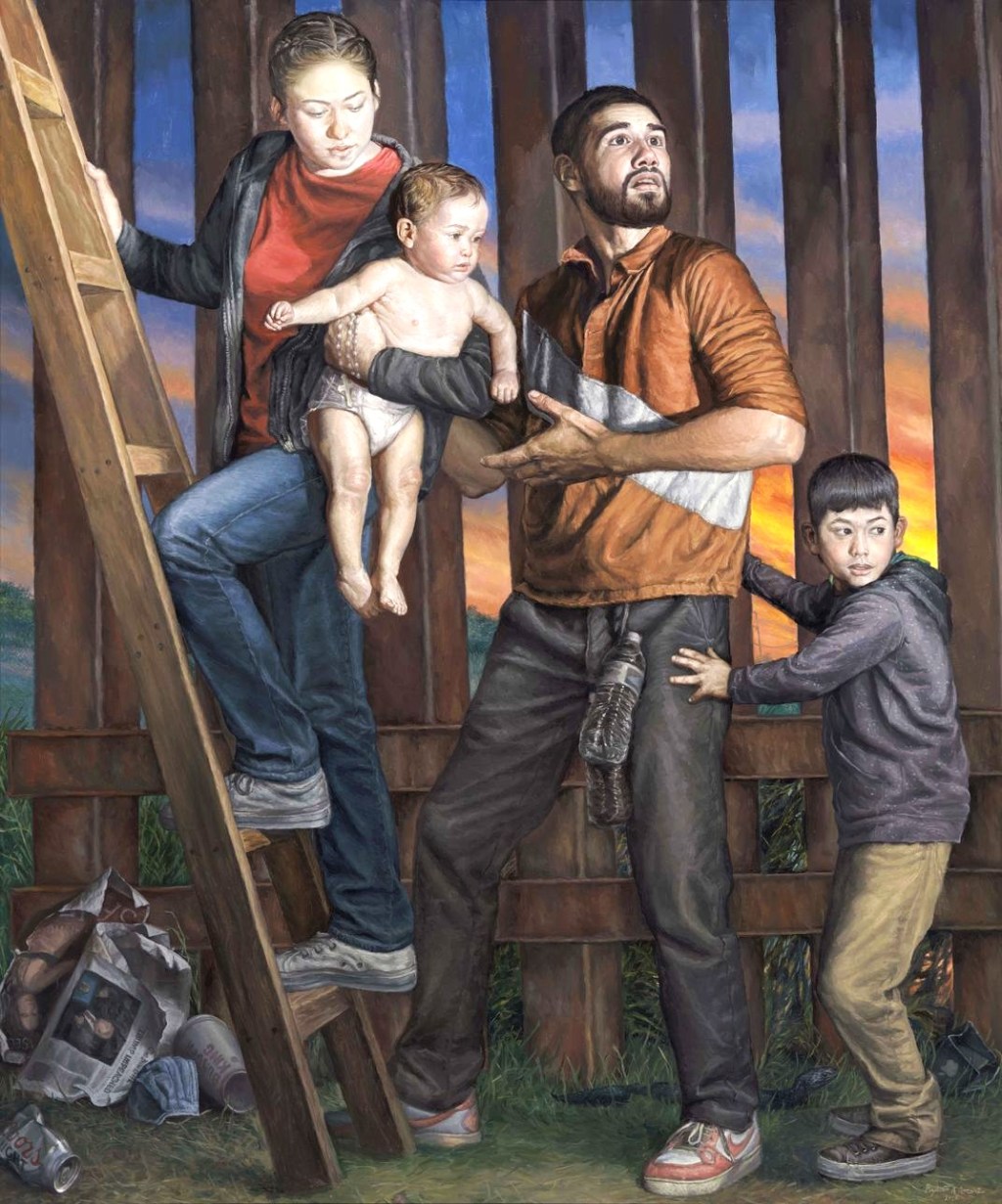

Rigoberto A. González, “Refugees Crossing the Border Wall into South Texas” (2020) was among the artworks targeted in a statement from the White House on August 21, 2025
In August 2024, the Trump White House issued a 26-point memo targeting the Smithsonian Institution, demanding “content corrections” for exhibitions that addressed slavery, migration, LGBTQ+ lives, or figures such as Angela Davis and Anthony Fauci. This act of censorship is not simply bureaucratic interference; it is an authoritarian manoeuvre in which curatorship becomes a weapon. To control museums is to control memory, identity, and the imagination of the future.
History gives us chilling precedents. Hitler’s 1937 exhibition of Entartete Kunst paraded modernist works as evidence of moral decay, while statues by Arno Breker stood as muscular totems of Aryan supremacy. Mussolini’s Mostra della Rivoluzione Fascista turned curatorship into spectacle, fusing Roman classicism with modern exhibition design to glorify the fascist state. In both cases, aesthetics were not decoration; they were doctrine, shaping minds and disciplining perception.
Trump’s attack on works such as Rigoberto A. González’s Refugees Crossing the Border Wall into South Texas or Amy Sherald’s Trans Forming Liberty belongs to this lineage. Like the fascists before him, Trump identifies the subversive potential of art: its ability to humanise the migrant, affirm Blackness, dignify queer lives, and render visible the fractures in national myths. To strike against these artworks is to strike against the possibility of empathy, solidarity, and dissent.
What is at stake is not merely curatorial independence but the struggle over cultural memory itself. Fascist regimes knew that to dominate aesthetics was to dominate politics, because images do not just reflect the world; they build it. Today’s far right understands this too, framing museums as battlegrounds of “American exceptionalism” against what they deride as “woke culture.”
From Hitler’s mockeries of “degenerate art” to Trump’s purge lists, the authoritarian eye sees art as dangerous precisely because it opens other futures. That danger is our weapon. For artists, curators, and the public alike, defending the plural, the contested, and the uncomfortable within museums is more than cultural work; it is resistance.
As Hyperallergic Art Magazine reminds us in its reporting, the fight over art is never neutral—it is always about who gets to tell the story of the present and who is allowed to imagine the future.
 Rupture Magazine
Leave a comment