

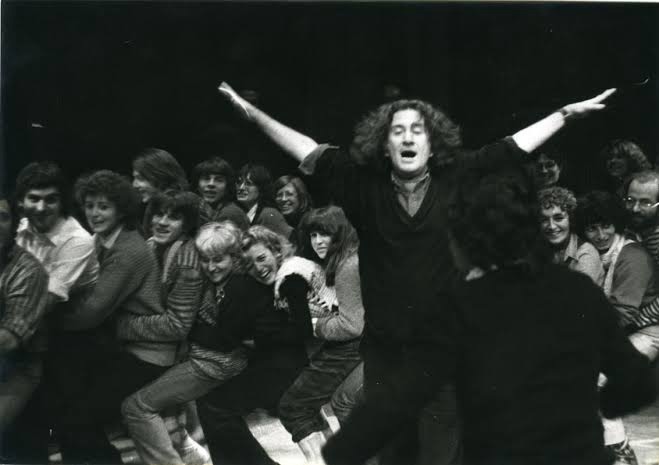
We are living in a moment of intensifying oppression: authoritarian governments, systemic violence, economic precarity, and ongoing social inequities. In times like these, theatre is not just art — it is resistance. Augusto Boal’s Theatre of the Oppressed (1974, 1979) emerges as a blueprint for collective action, transforming audiences into “spect-actors” who do not simply watch but intervene, challenge, and imagine alternatives.
Born under Brazil’s military dictatorship, Boal’s work was influenced by Paulo Freire’s critical pedagogy, emphasizing dialogue, reflection, and empowerment (Freire, 1970). Forum Theatre, one of Boal’s core techniques, stages real-life oppression — from workplace exploitation to police violence — allowing communities to experiment with strategies of resistance before acting in the real world (Boal, 1992; Cohen-Cruz, 1998). Legislative Theatre extended this practice to participatory governance, showing how performance can directly shape policy and civic engagement.
Today, Boal’s methodology is more urgent than ever. In the face of rising authoritarianism, structural inequalities, and ecological crises, oppressed theatre offers a space to rehearse freedom, cultivate solidarity, and develop collective agency. Its power lies not in representation alone but in embodiment: the theatre becomes a laboratory for change, where imagination meets action (Schutzman & Cohen-Cruz, 2006).
For artists, activists, and communities, now is the time to embrace Boal’s legacy. Theatre cannot wait for justice to arrive; it must act it into being. In a world rehearsing oppression, oppressed theatre rehearses liberation.
References
Boal, A. (1979). Theatre of the Oppressed. Pluto Press.
Boal, A. (1992). Games for Actors and Non-Actors. Routledge.
Cohen-Cruz, J. (1998). Radical Street Performance: An International Anthology. Routledge.
Freire, P. (1970). Pedagogy of the Oppressed. Continuum. Schutzman, M., & Cohen-Cruz, J. (2006). A Boal Companion: Dialogues on Theatre and Cultural Politics. Routledge.
 Rupture Magazine
Leave a comment