
Rupture Magazine Review
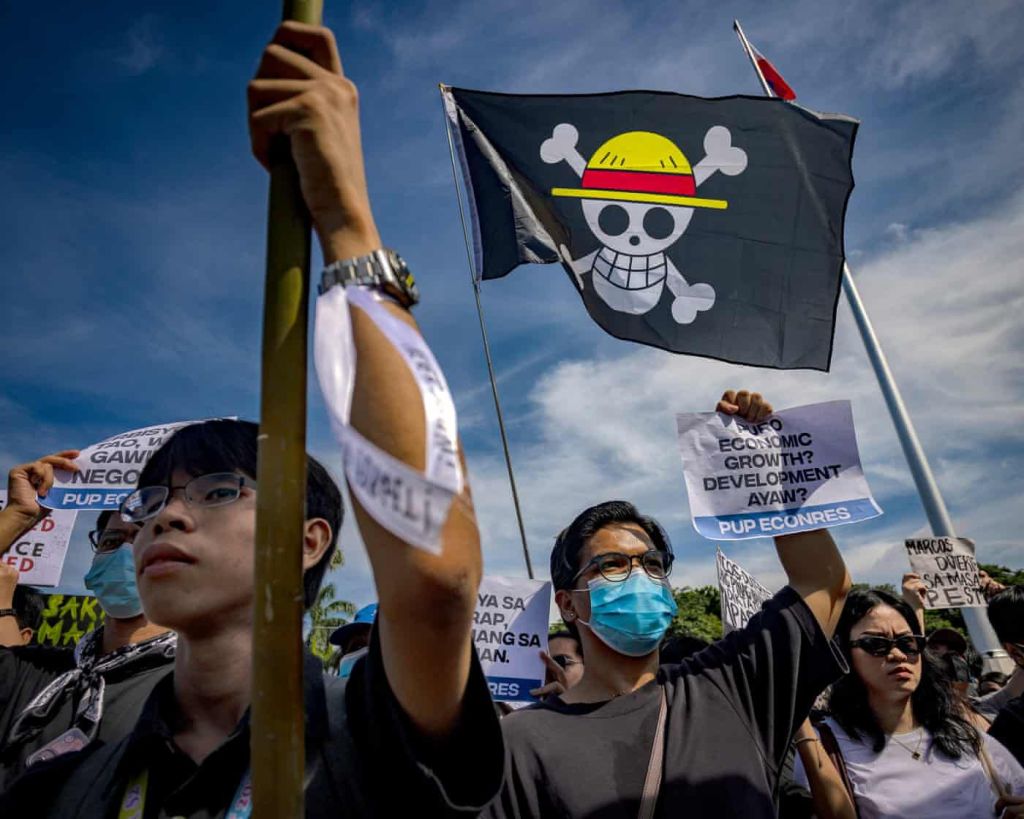
In the streets of Jakarta, Kathmandu, and Manila, a skull with a straw hat waves above the crowds. It isn’t a national emblem, nor a corporate logo. It’s the flag of the Straw Hat Pirates, from Eiichiro Oda’s One Piece — a work of fiction that has escaped the screen to become a real-world banner of rebellion.
What we are witnessing is not only a political statement but a visual rupture: the transformation of a pop-cultural image into a shared language of resistance. Young people are reclaiming a cartoon symbol to express what formal politics has failed to articulate — the desire for freedom, fairness, and belonging.
John Berger once wrote in Ways of Seeing that “the relation between what we see and what we know is never settled.” This is precisely where the One Piece flag operates. It carries the emotional weight of adventure, camaraderie, and defiance. It transforms the familiar grammar of protest — fists, placards, slogans — by inserting play, imagination, and cultural memory.
The pirate flag, once a mark of outlawed existence, becomes a mirror of the contemporary subject: disenchanted yet hopeful, excluded yet connected through global networks of imagery. These representations work because they collapse distance — between the imagined and the lived, between fiction and politics. The crowd waving anime flags is also waving at itself, discovering in a cartoon’s mythology a reflection of its own longing for justice.
Art imagery is powerful because it bypasses the rational. It doesn’t demand agreement; it evokes recognition. In the One Piece flag, we see how symbols can move from entertainment to emancipation, carrying the emotional residues of childhood into acts of civic courage.
This is not a coincidence. Every rupture begins with a way of seeing — and this time, the eye is collective.
 Rupture Magazine
Leave a comment